

Inlays and onlays are restorations that repair damaged teeth. They are considered a more conservative approach to full-coverage crowns, which are also used to reconstruct damaged teeth. Unlike crowns, inlays and onlays do not require significantly filing down the tooth structure. Inlays and onlays simply fit into the space left after damaged or diseased tooth structure has been removed. You can think of them as treating only tooth decay as opposed to the entire tooth. Inlays and onlays are created in an outside dental laboratory and are virtually indistinguishable from the rest of the tooth structure.
Not only do inlays and onlays look great, but they are also better for the health and longevity of the tooth. Removing too much healthy tooth structure can cause a tooth to wear down sooner and make it susceptible to fracture. The conservative approach of placing an inlay or onlay may also help prevent tooth pain that sometimes accompanies the removal of a large amount of tooth structure.
TRUSTED WITH PROVIDING EXCELLENCE IN ORAL HEALTH
When Are Dental Inlays and Onlays Used?
Inlays and onlays are generally used when a tooth has a large amount of decay as compared to the rest of the tooth structure — that is, too much decay to successfully treat it using a dental filling. Inlays and onlays can also be used to replace an older dental filling.
Inlays fit inside the top points or “cusps” of the chewing surface, and onlays are more extensive, covering one or more of the cusps.
Inlays and Onlays Treatment Details
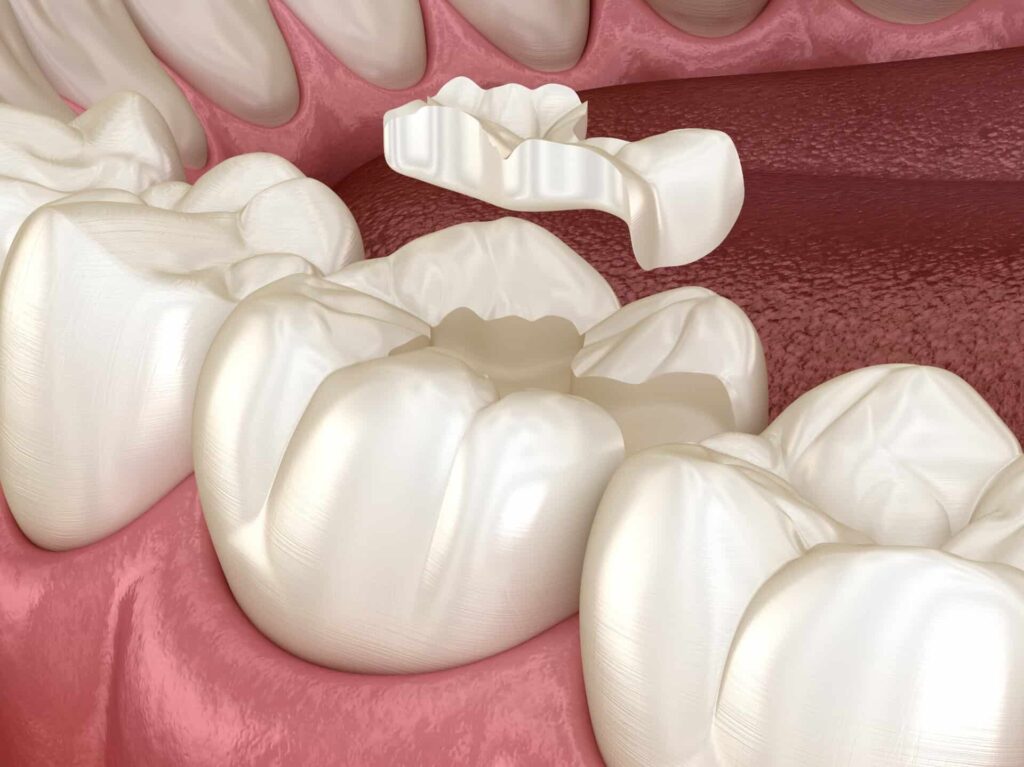
The process of getting an inlay or onlay generally takes about two appointments, as it involves using an outside dental laboratory to construct the restoration.
First Dental Appointment
During the first appointment, Dr. Porter or Dr. Purifoy will remove damaged/diseased tooth structure or the old filling. The tooth is cleaned and prepared to receive the restoration. Impressions are taken of the affected tooth to send to the lab that creates the inlay or onlay. The color of the restoration is also selected to match the surrounding tooth structure and nearby teeth. Drs. Porter and Purifoy can place a temporary restoration to cover the prepared tooth until the next appointment.
Second Dental Appointment
Once the inlay or onlay is ready, the second appointment takes place. The restoration is cemented into place and checked for fit. The restoration can be adjusted as needed to achieve a natural, even appearance and a good bite. Finally, the inlay or onlay is polished so it gleams like natural tooth structure.
Inlay & Onlay Recovery
There may be a slight adjustment period as you get used to the way the inlay or onlay feels; however, it should not take more than a few days.
Teeth restored with inlays and onlays should be cared for like natural teeth, meaning brushed and flossed every day. They should also be checked by a dentist every six months to ensure there is no damage.
Why Choose Us For Inlays and Onlays
At Porter Dental Health Clinic, our experts view inlays and onlays as precise, conservative solutions for restoring damaged teeth. Dr. Lance Porter and Dr. Will Warren focus on preserving as much natural tooth structure as possible while restoring strength and function.
Our dentists carefully plan each restoration to fit the tooth accurately, support long-term durability, and maintain a comfortable bite. This helps our patients protect their natural teeth without unnecessary treatment.
FAQs About Inlays and Onlays
How are inlays and onlays different from regular fillings?
Inlays and onlays are custom-made restorations used when a tooth has moderate damage that's too extensive for a traditional tooth-colored filling but not severe enough to require a full dental crown. Unlike fillings that are shaped directly in the mouth, inlays and onlays are crafted in a dental lab for a precise fit.
What materials are used for inlays and onlays?
Inlays and onlays are commonly made from tooth-colored ceramic or composite materials. These options are strong and durable while also blending with the natural shade of your teeth.
Will an inlay or onlay feel different from a natural tooth?
Most patients find that inlays and onlays feel very natural once placed. Because they are custom-fabricated to match the shape and contours of your tooth, they integrate comfortably with your bite and chewing patterns.
How long do inlays and onlays last?
With proper care, inlays and onlays can last many years. Their longevity depends on oral hygiene, diet, and bite force, but they are generally more durable than traditional fillings and help protect the remaining tooth structure.
Can an inlay or onlay prevent the need for a crown?
Yes, inlays and onlays sometimes serve as a conservative alternative to crowns. They preserve more of the healthy tooth while restoring strength and function. When a tooth has enough sound structure remaining, inlays and onlays are a strong restorative choice.
Is the inlay and onlay process uncomfortable?
Most patients experience minimal discomfort. The procedure typically involves removing decay or old fillings, taking impressions, and placing a temporary restoration while the custom piece is made. Once the final inlay or onlay is bonded, any residual sensitivity usually fades quickly.
How do I care for my inlay or onlay?
Care is similar to caring for natural teeth. Brushing twice daily, carefully flossing around the restoration, and scheduling regular check-ups help maintain gum health and prevent decay at the edges of the inlay or onlay.
Does insurance cover inlays and onlays?
Coverage varies by plan. Many dental insurance policies cover a portion of the cost for inlays and onlays because they're often considered restorative.
If you have areas of tooth decay that could be restored with inlays or onlays, Dr. Lance Porter can help. Schedule a consultation with Dr. Porter to discuss these and other restorative dentistry solutions. You can make an appointment by calling (501) 624-2778 or emailing our office today.